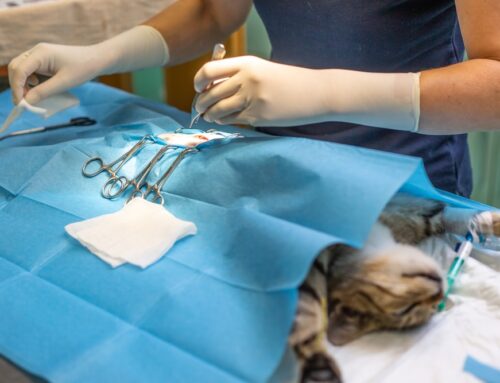

At Vets to Pets, we are dedicated to providing high-quality veterinary care in the comfort of your home throughout Northern Virginia. One of the advantages of mobile veterinary medicine is being able to evaluate pets where they feel most relaxed; but just as important as where we examine pets is how we examine them. The tools we use during an in-home visit help us gather accurate information while keeping the experience calm and low-stress.
Listening, Looking, and Feeling First
Before any equipment comes out, much of the exam is hands-on observation:
- Watching how your pet moves around the home
- Evaluating breathing, posture, and behavior
- Gently palpating the body for pain or abnormalities
This “baseline exam” tells us a lot without any stress or restraint.
Core Exam Tools We Use
We rely on simple, portable tools that give us big insight:
- Stethoscope – to listen to heart and lungs
- Thermometer – to check body temperature quickly and safely
- Otoscope – to look inside ears for infection, inflammation, or mites
- Ophthalmoscope – to evaluate internal eye structures
- Pen light / focused lighting – for skin, mouth, and eye assessment
Each tool helps us see what we can’t detect with touch alone.
Diagnostic Tools That Add Another Layer
When needed, we may also use:
- In-home blood collection supplies
- Fecal test kits for parasites
- Urine collection and testing materials
- Cytology slides for ear or skin samples
These help us make decisions in real time, often without needing a clinic visit.
Fear Free Handling Tools
Just as important as medical tools are comfort-focused techniques:
- Soft towels for gentle restraint or wrapping
- Treats and positive reinforcement
- Low-stress positioning on familiar surfaces
- Slow, minimal handling approaches
These help keep the experience calm for anxious pets.
Medicine That Comes to You
Every tool we use has one purpose: to bring high-quality veterinary medicine into a setting where pets feel safe. When pets are relaxed, we get better information – and when we get better information, we can make better decisions for their care.